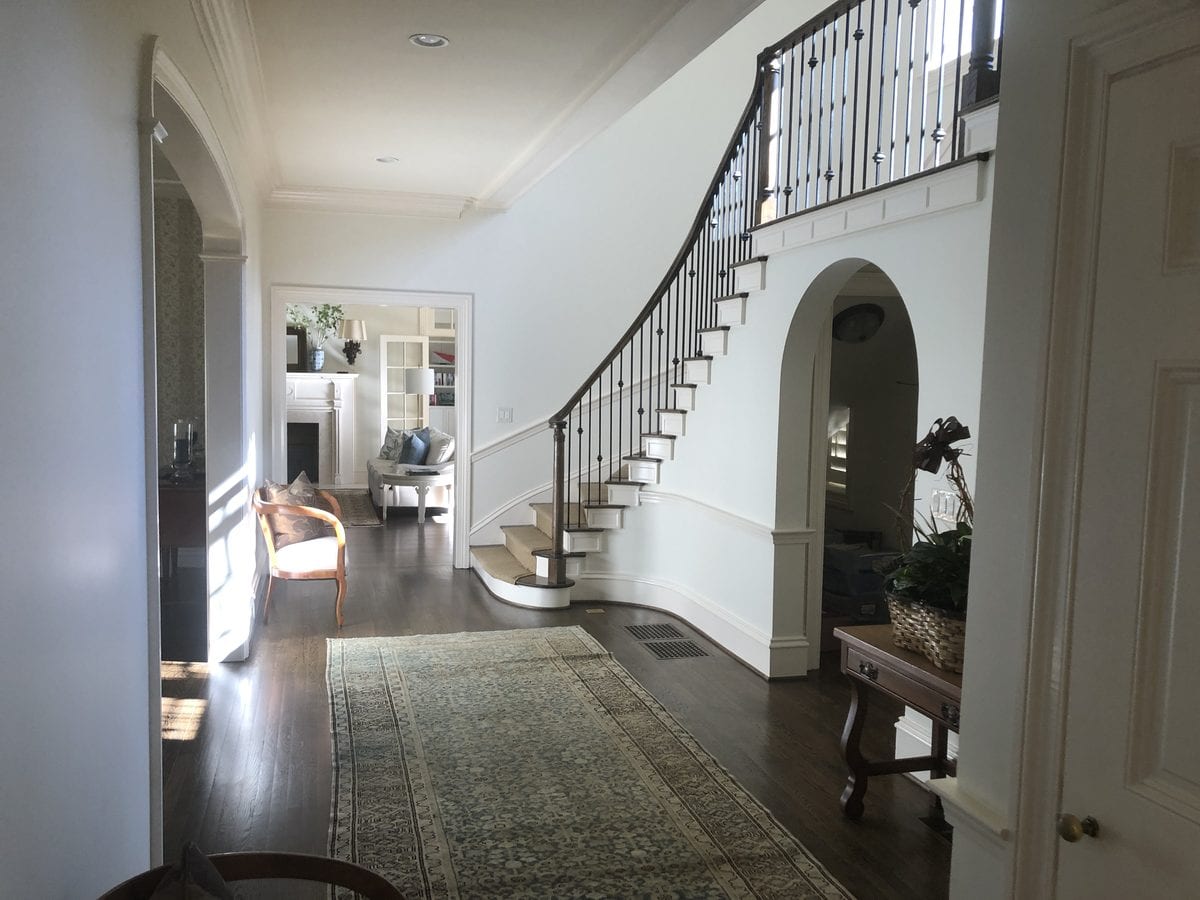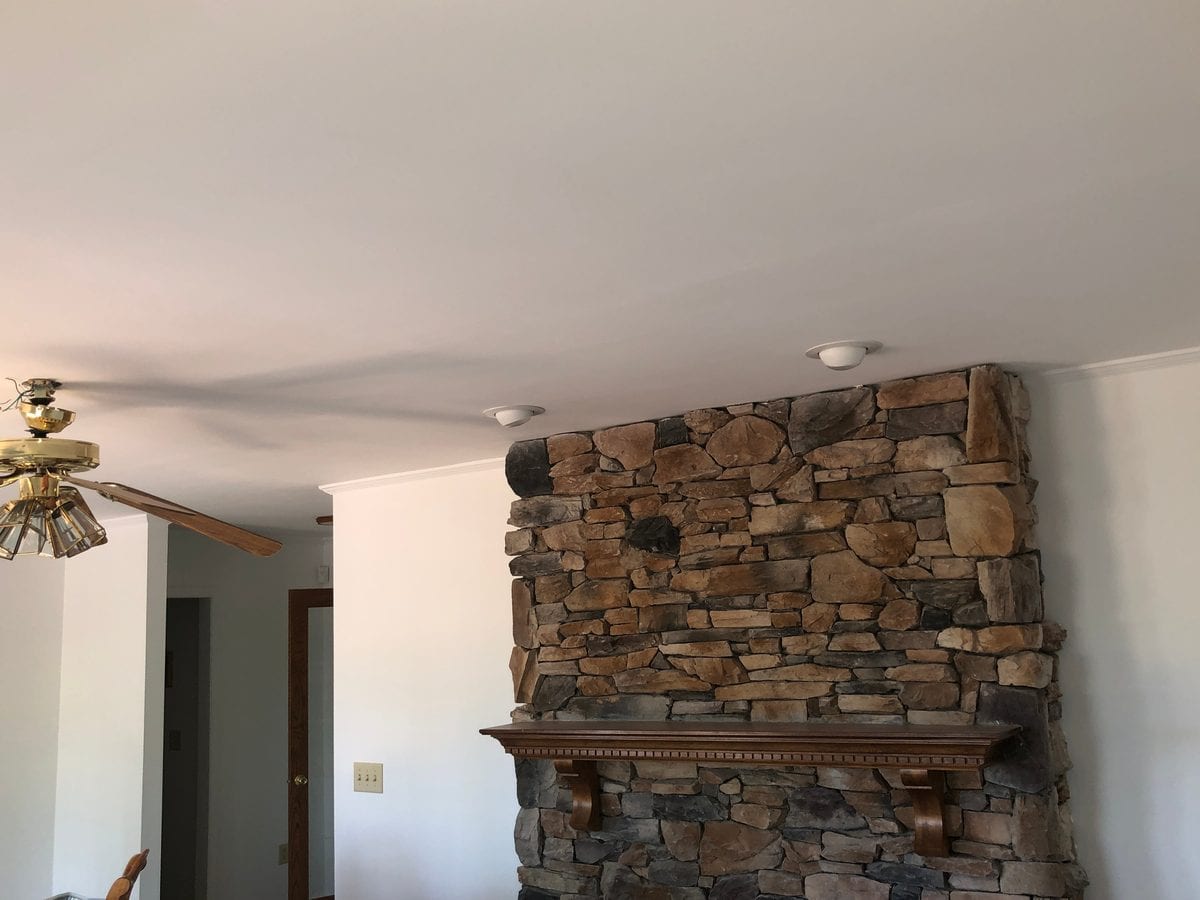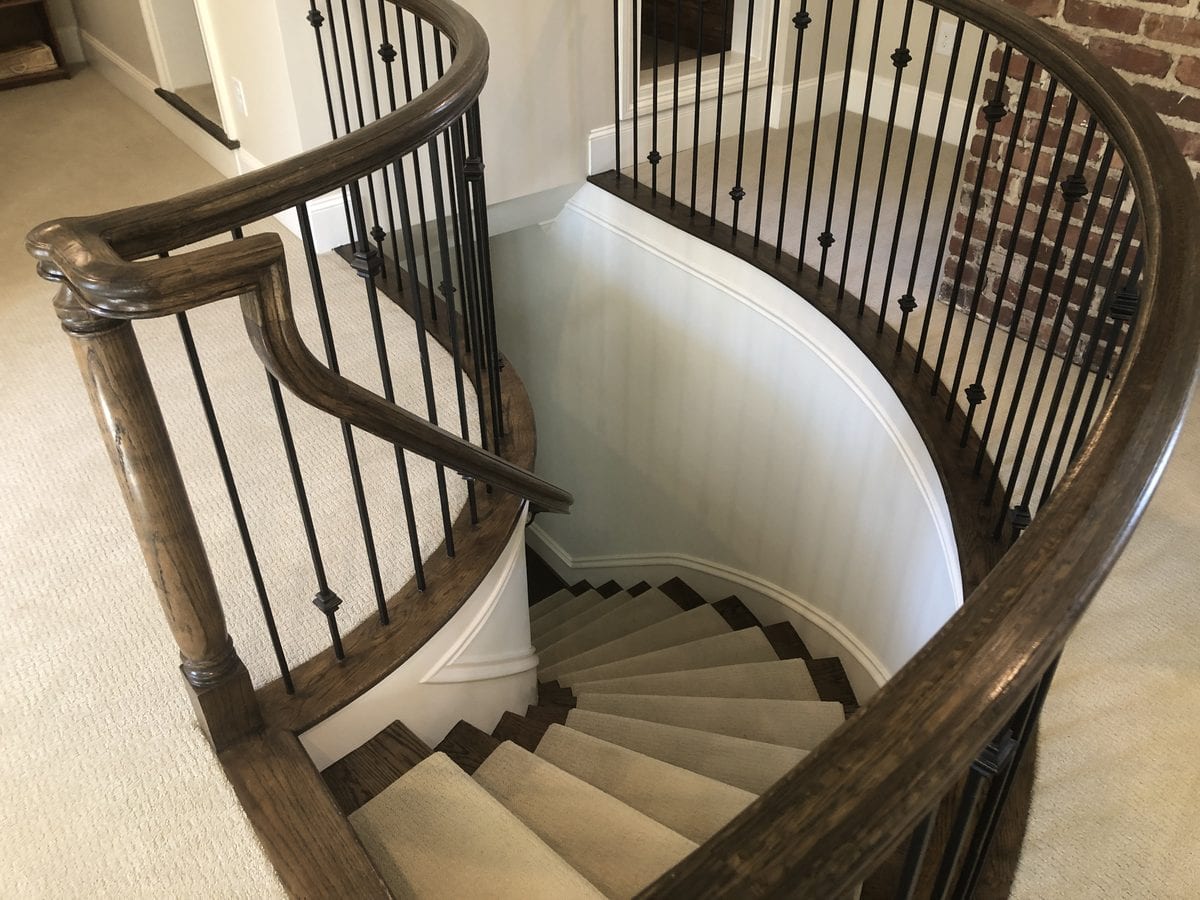
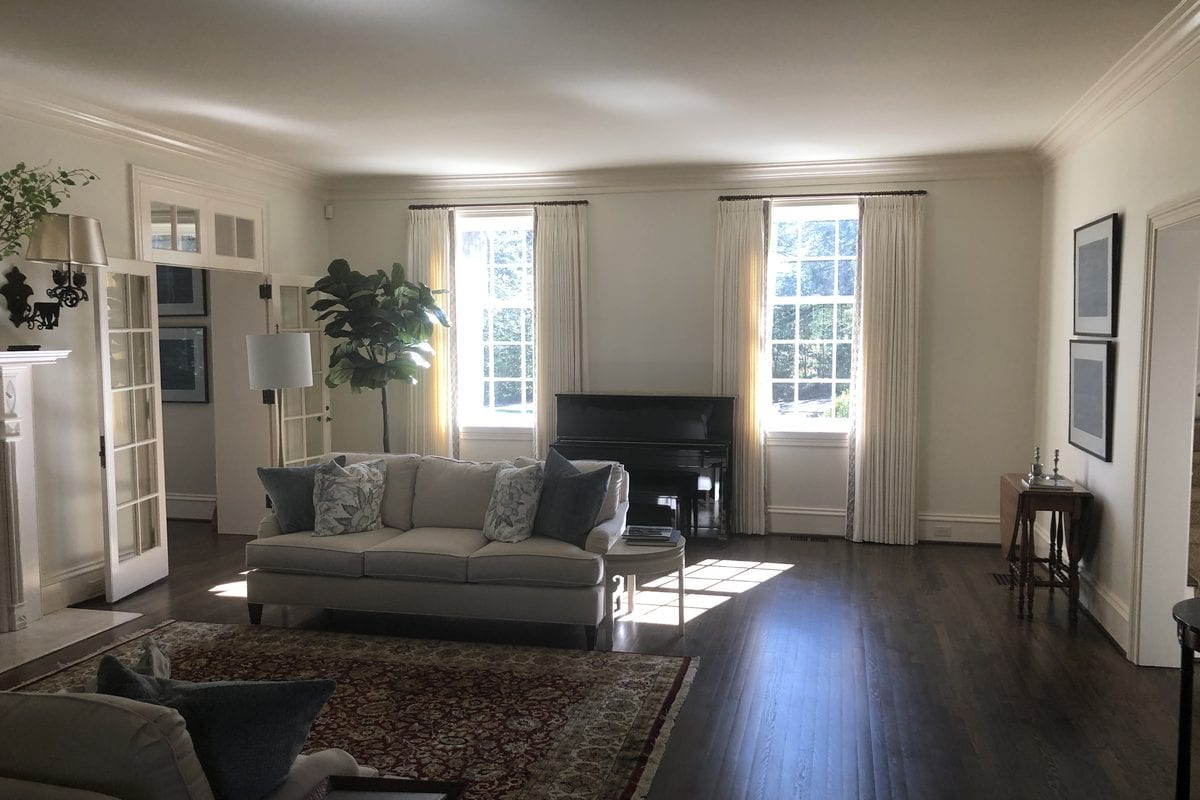
Interior painting is the part of this trade where the finish is inspected from eighteen inches away, in daylight, by somebody who lives there. Walls, ceilings, trim, doors and closets — cut in by hand rather than taped and hoped for, with your house protected while we are in it and put back before we leave each evening.
Before any paint comes out
Furniture is moved to the middle of the room and covered, floors are protected wall to wall, and switch plates and hardware come off rather than getting cut around. Then the repairs: nail pops, hairline cracks at the corners, dings in the trim, the patch behind where a mirror used to hang. Those get filled, sanded and spot-primed. Filler left unprimed flashes dull through a finish coat and shows as a map of every repair on the wall, which is a common way a decent paint job gets spoiled at the last step.
Anything with a stain in it — water marks on a ceiling, smoke, tannin bleeding out of knots in old trim — gets a stain-blocking primer. Ordinary wall paint will not hold those back. They come through within weeks and the room has to be done twice.
Fix the cause first
A water-stained ceiling means something leaked. If it is still leaking, painting it is a waste of your money and our time, and we will say so. That is a conversation worth having at the estimate rather than after the finish coat.
Older Triad houses
A great many homes in Fisher Park, Westerwood, Ardmore and the older streets of High Point have plaster rather than drywall, deep milled trim, and coatings that pre-date 1978. Plaster cracks differently from drywall and needs a different repair. Old trim profiles have to be prepared by hand because no sander gets into them. And where the existing coating is old enough to contain lead, lead-safe work practices apply to anything that disturbs it — containment, wet methods, and a proper clean-up rather than a broom.
It is slower work than a 2005 subdivision repaint, and we price it as such rather than discovering it halfway through.
Sheen, and why we ask
Flat hides a wall's imperfections and is hard to wash. Eggshell and satin clean up but throw side-light across every ripple in old plaster. Semi-gloss on trim is durable and shows every brush mark if it is rushed. Which one is right depends on the room, the surface and who uses it, so we would rather talk it through than write "eggshell throughout" and leave you with the wrong finish in the hallway.
Drywall repair is usually part of this
Most interior jobs turn up something that needs patching, and we handle it rather than sending you to find a second contractor. Grace A. had her whole second floor done; Lisa B. had sheetrock repaired in the dining room and kitchen before we painted. That is the normal shape of an interior job here.