
Paint is the cheapest protection your house has and the first part of it to fail. On an exterior it is doing real work — sealing end grain, keeping water out of joints, holding UV off the wood — and once it lets go, the repairs underneath cost several times what the repaint would have.
Preparation is the job
Everything else is application. Ours starts with washing off the chalk, dirt, pollen and mildew that a Piedmont year deposits on a house. Then scraping and sanding failed coating back to a sound edge, replacing trim and siding that has gone soft instead of painting over it, caulking the joints and penetrations that have opened, and priming every bare surface before the topcoat.
Paint applied over chalk, over mildew, or over a coating that has already lost its grip fails on the same schedule the old one did, whatever it cost per gallon. This is the single biggest difference between quotes, and it is invisible in the finished job for about three years.
What our weather does
South and west elevations take the hardest UV and fail years before the north side. That is why so many Triad houses look fine from the street and poor from the driveway, and why a proper estimate prices elevations separately rather than by the square foot of house.
Humidity and tree cover do the opposite on the shaded north and east walls: they stay damp, and they grow mildew rather than fading. Washing those walls properly — and treating the mildew rather than painting over it — is what stops the new coating going green in two summers.
Then there is our spring. Pine pollen coats everything in the Triad for several weeks, and paint applied over a film of pollen does not bond to anything. We work around it rather than through it.
And red clay: on houses with siding close to grade, rain splash drives clay onto the bottom courses and stains them. That comes off before we coat, or it sits under the new paint permanently.
Scheduling around the substrate
We do not spray a hot, sunny elevation in the middle of a July afternoon — a hot substrate flashes the coating off before it can level and adhere. In autumn we watch the dew point, because a coat applied too late in the day never properly cures and will be chalky by spring. Those two rules cost us working hours and are not negotiable.
Surfaces
Wood siding, soffit, fascia and trim. Fibre cement and engineered wood, whose cut ends must be sealed or they wick water. Brick and masonry, where the product matters more than the colour, because a film-forming paint on masonry traps moisture and spalls the face of the brick. Porches, railings, shutters and garage doors.
Old houses
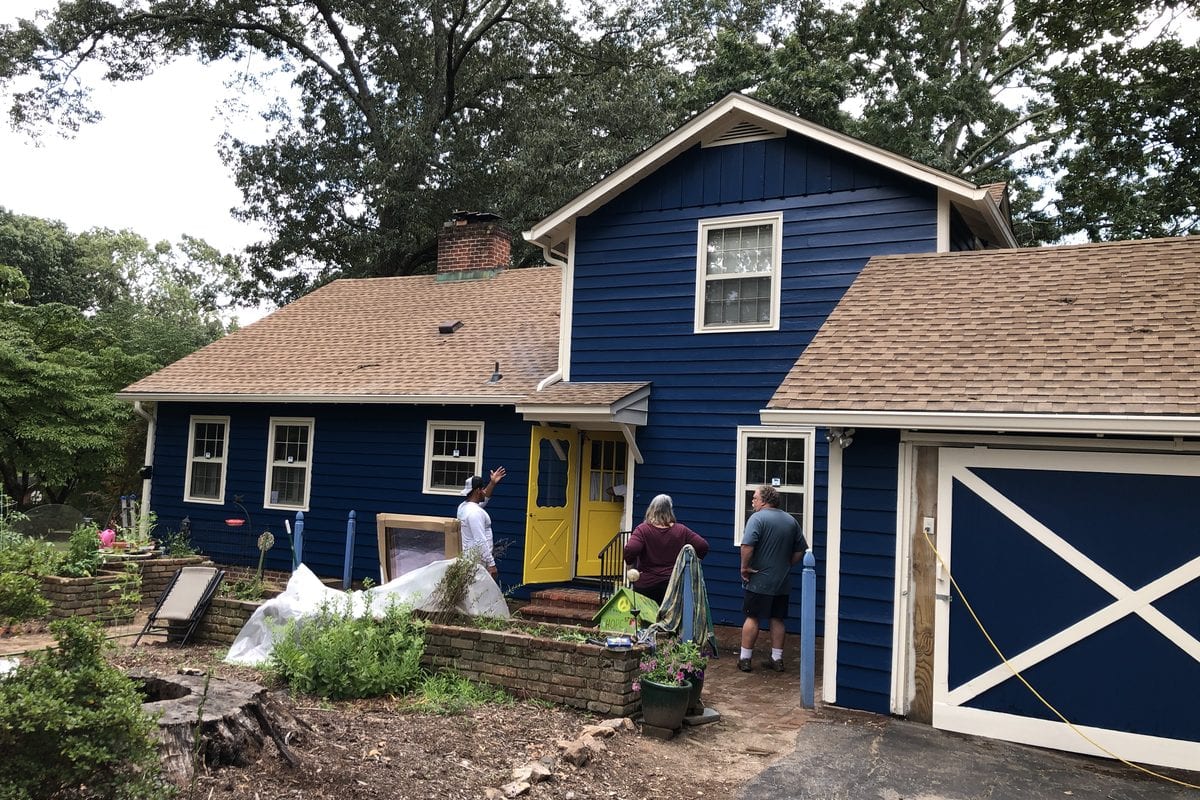
W G's house was over eighty years old with wood siding chipped back to bare wood across large areas and no repaint in thirty years. That is a preparation job with a paint job attached, and the only honest way to price it is to look at it properly first — with photographs and measurements — and set out in writing what is included.