
Washing is where most of our exterior work begins, and it is also a service in its own right. The important thing to understand is that "pressure washing" is a misleading name for what should actually happen to most surfaces on a house: the cleaning is done by the right chemistry and enough dwell time, not by force.
Soft washing for siding
Vinyl, fibre cement, engineered wood, painted wood and brick get soft washed — low pressure with a cleaning solution that kills the mildew and algae rather than blasting the surface. High pressure on siding drives water up behind the laps and into the wall cavity, strips paint from wood, and etches the surface of older vinyl so it holds dirt worse than before.
The green and black staining on the north and east walls of Triad houses is biological growth, not dirt. Blasted off with pressure, it comes back within months because the organism is still there. Treated properly, it stays away far longer.
Wood needs the least pressure of all
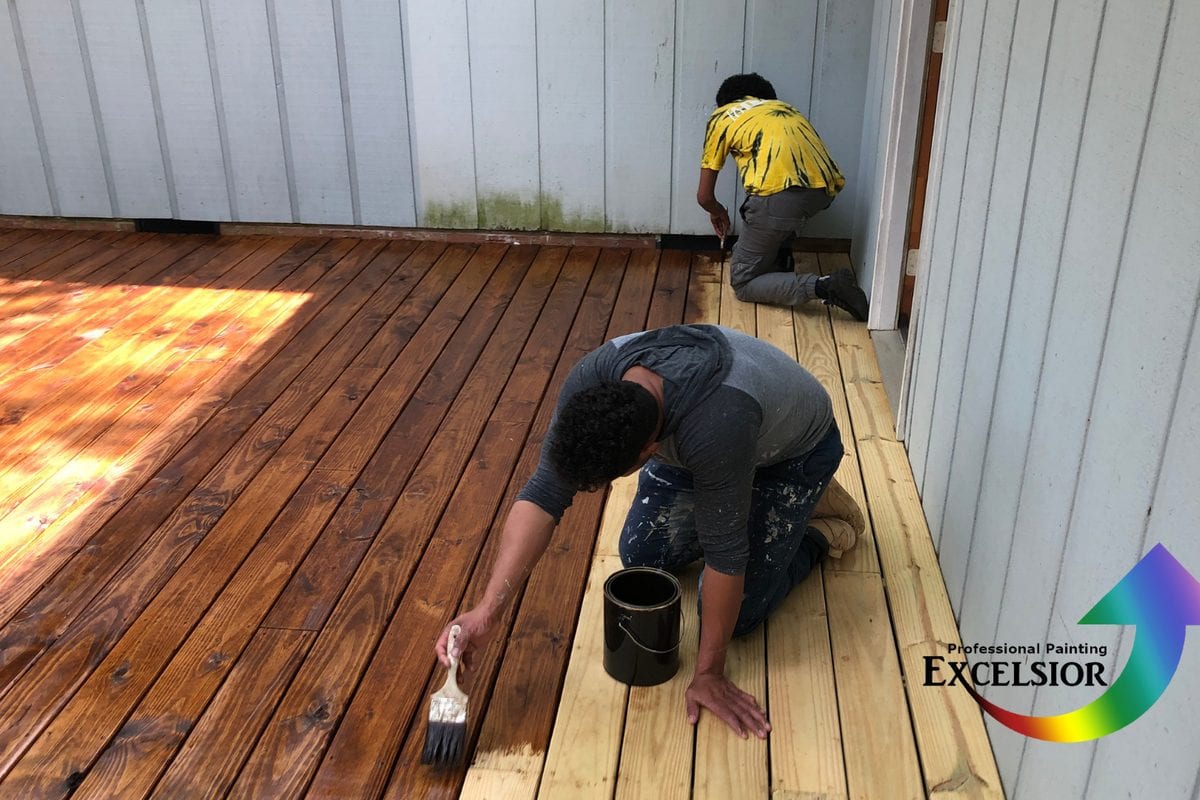
Decking, fencing and cedar are soft. Cleaned at driveway pressure they fuzz, the grain tears, and the wand leaves lap marks that print through any finish applied afterwards. This is the single most common way a deck is ruined before it is stained — and it is usually done by someone being quick rather than someone being careless.
Larry holds a house-washing certification through the PWNA, which is the trade body for this work.
Concrete, brick and hardscape
Driveways, walkways, patios and steps take genuine pressure, and here surface cleaners rather than a bare wand are what produce an even result. A driveway cleaned with a zero-degree tip is left with permanent stripes.
Our red clay is its own problem: rain splash drives clay onto the bottom courses of siding and into the pores of concrete, and it needs the right treatment rather than more pressure.
Roofs
We do not blast roofs. Pressure on asphalt shingles strips the granules that the shingle depends on and takes years off it. The dark streaking common on Piedmont roofs is algae, and it is dealt with chemically at low pressure or not at all.
Washing before painting
Every exterior repaint starts here. Chalk, pollen, dirt and mildew are all surfaces that paint will not bond to, and coating over any of them is a guaranteed early failure. Spring pollen matters more here than most places — the Triad gets a heavy yellow pine pollen season, and a house washed in March and painted in April needs washing again in between.
The wash is not a preliminary. It is the first coat of the job.