Popcorn and textured ceilings date a room faster than anything else in it, and they collect dust, cobwebs and allergens in a way a flat ceiling does not. We remove them, skim them smooth and repaint, across Greensboro, Winston-Salem, High Point and the towns around them.
If the house pre-dates 1980, test first
Ceiling texture applied before about 1980 can contain asbestos, and a great many Triad houses are that old. Intact and overhead it is harmless. It stops being harmless the moment somebody puts a scraper through it.
So before any pre-1980 ceiling is disturbed, have the texture sampled and tested by a lab. It is inexpensive and the answer is definitive. If it comes back positive, that is licensed asbestos abatement work — a different trade with different certification — and we will tell you so rather than take the job. If it comes back negative, which is the more common result, we can get on with it.
We would rather lose the work than scrape a ceiling nobody tested.
Containment is most of the job
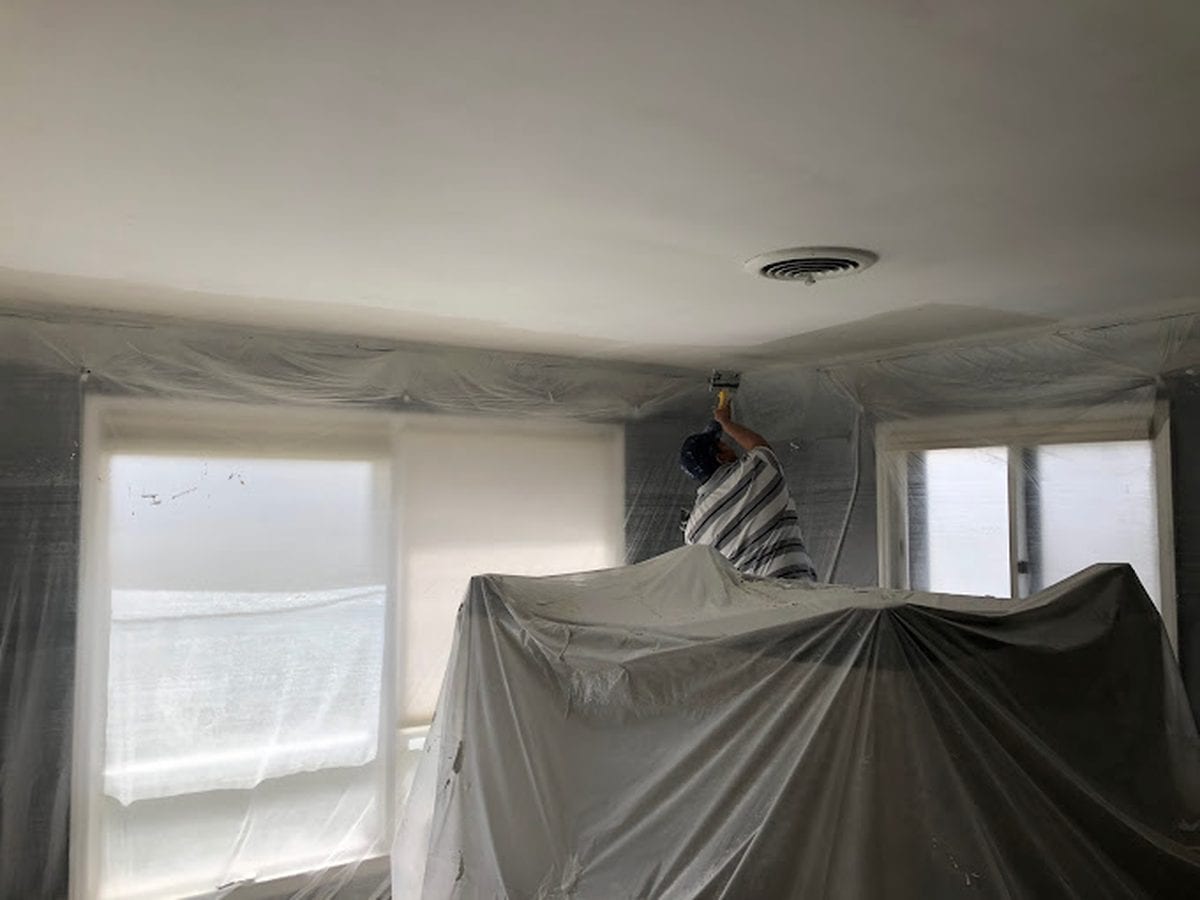
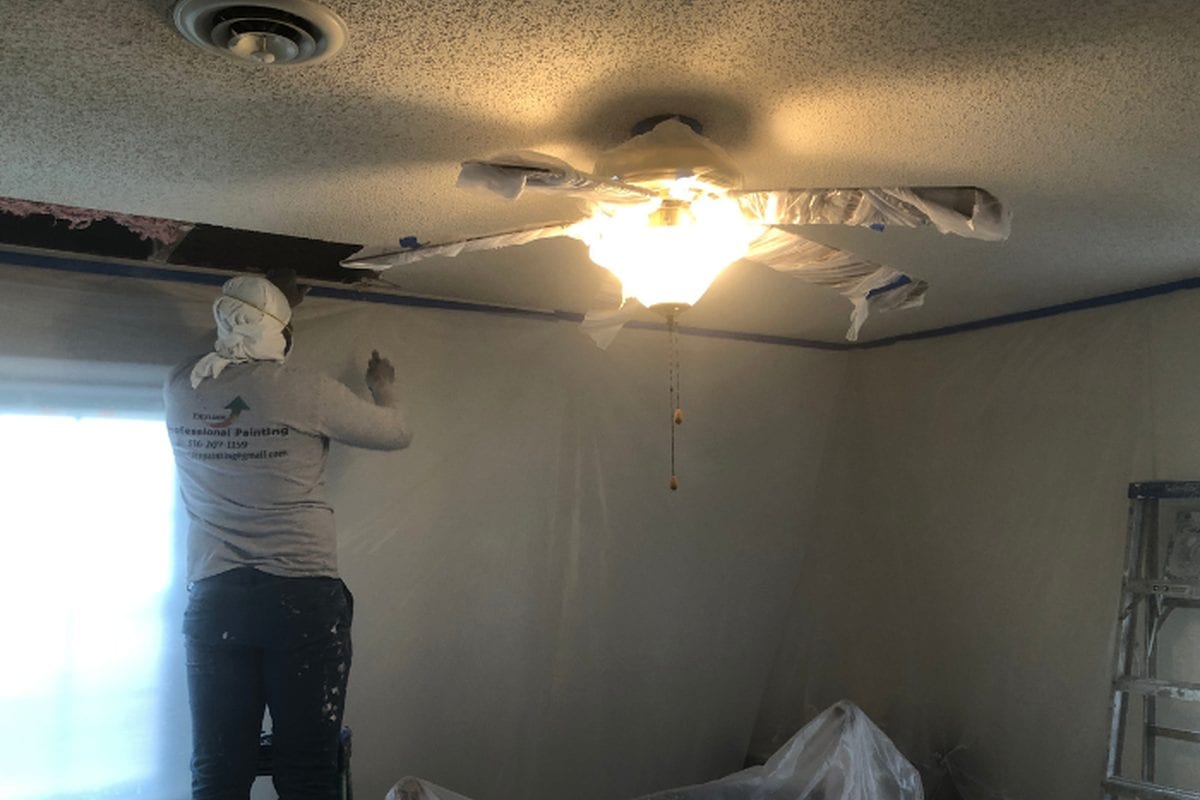
Scraping a ceiling makes an extraordinary amount of mess, and the difference between a good ceiling job and a bad one is very largely about where that mess ends up.
Furniture is removed or sheeted. Floors are covered wall to wall. Walls are masked. Doorways are sealed, and — this one gets missed constantly — HVAC supply and return vents are covered, because an open return will distribute ceiling debris through every room in the house and leave it in the ductwork. Light fixtures and ceiling fans come down rather than being worked around.
The debris leaves with us.
Scraped is not finished
Once the texture is off, what is underneath is rarely ready for paint. The original drywall joints were finished to a lower standard because the texture was going to hide them. Screw heads telegraph. There is usually old damage, and often a water stain or two that nobody knew about.
So the ceiling gets skimmed, sanded and primed before the finish coats. Skipping that step swaps a dated ceiling for a blotchy one, which is how a lot of DIY popcorn removal ends.
The result
A flat, smooth, uniformly painted ceiling — or a light modern texture if that is what you prefer. Rooms read as taller and noticeably brighter afterwards, because the texture was casting thousands of small shadows.
Craig McCleary had all of his popcorn ceilings removed and a ceiling hole repaired where the drywall had started coming down, with minimum disruption. Tammy McElroy had complicated texture across her ceilings and had the walls, ceilings and trim finished at the same time — which is usually the efficient way to do it, since the room is already masked and emptied.