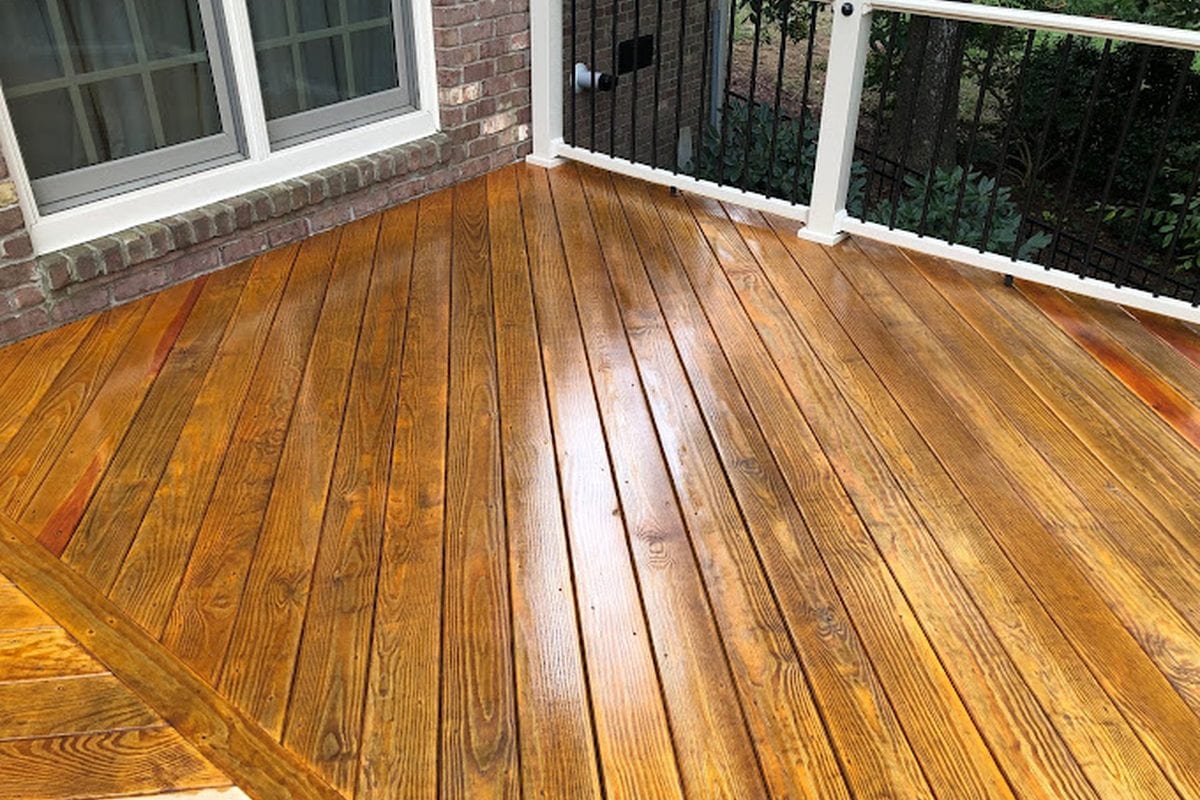
Deck cleaning, restoration and staining is our speciality rather than a sideline. Larry holds a wood-restoration certification through Deck Restoration Plus in New Jersey and a house-washing certification through the PWNA, and a good share of our work every year is wood that other people had written off.
Why decks fail here
A Piedmont deck takes UV from above, humidity from below and tree litter for most of the year. Horizontal surfaces — the field boards, the stair treads, the top of the rail — take nearly all the damage, which is why a deck can look sound from underneath and be grey and furred on top. Shaded decks under hardwoods do not dry out between rains and grow mildew instead of fading. Lake-side and open decks around Belews Lake or the Yadkin do the opposite and burn off a stain faster than an inland deck will.
Cleaning, brightening, then stain
Stain is the last step, not the job. We wash at a pressure the wood can take — wood is soft, and a contractor who cleans cedar or pine at the pressure you would use on concrete will fuzz the grain and leave lap marks that show through the finish. Where the boards have gone grey we use a brightener to bring the colour back and to neutralise the cleaner, because stain applied over an alkaline surface does not bond properly. Failed and flaking coatings come off before anything new goes on. Popped nails, split boards and soft framing get dealt with first.
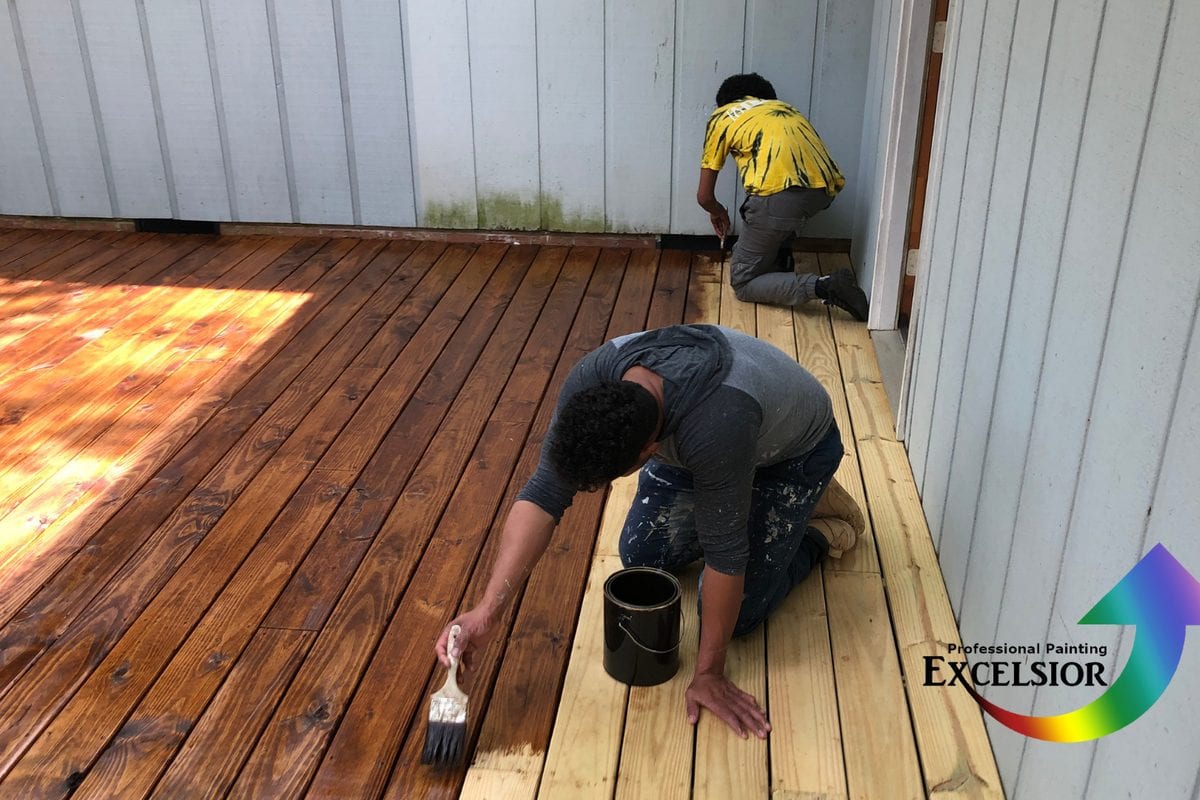
Then the stain goes on, back-brushed rather than simply sprayed, with the colour chosen from a range wide enough that you are matching your house rather than settling for whatever was in the truck.
Fences too
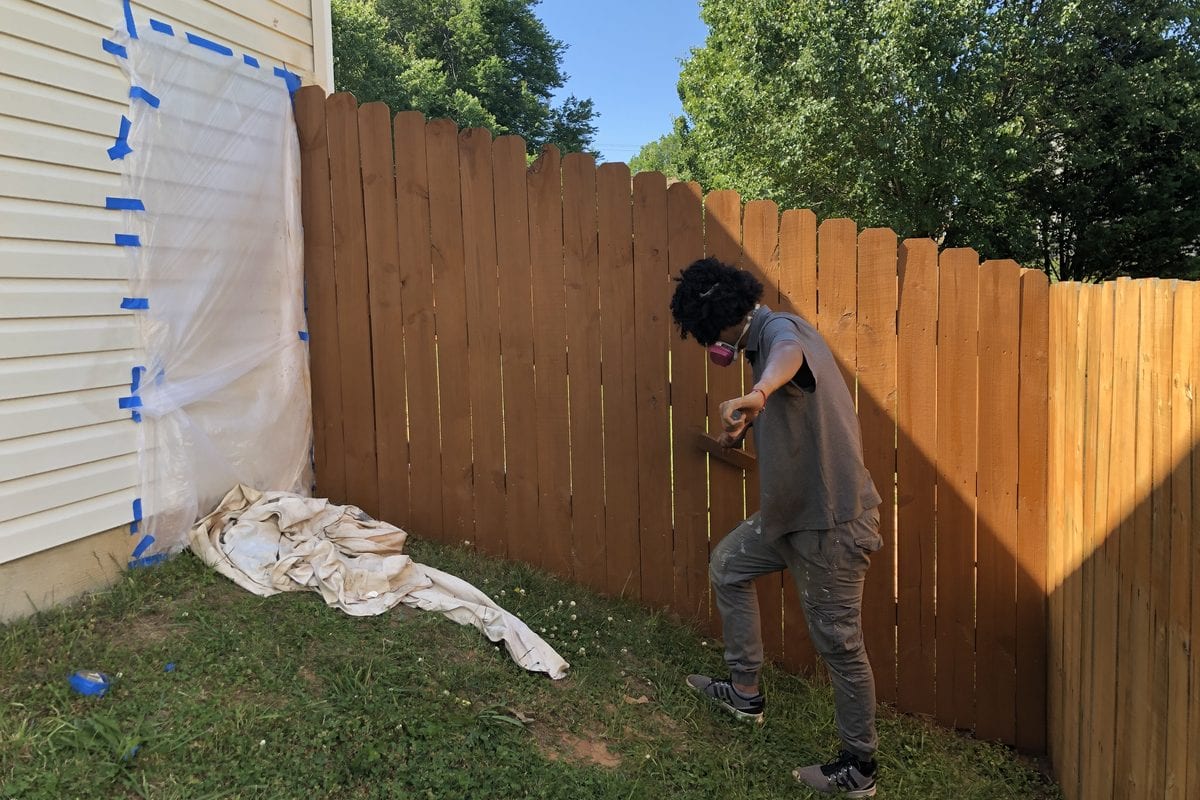
Board, picket and privacy fences, and the outbuildings that usually come with them. The thing that matters on a fence is treating the whole run at once so it weathers evenly — a fence stained in two sessions a year apart reads as two fences from then on.