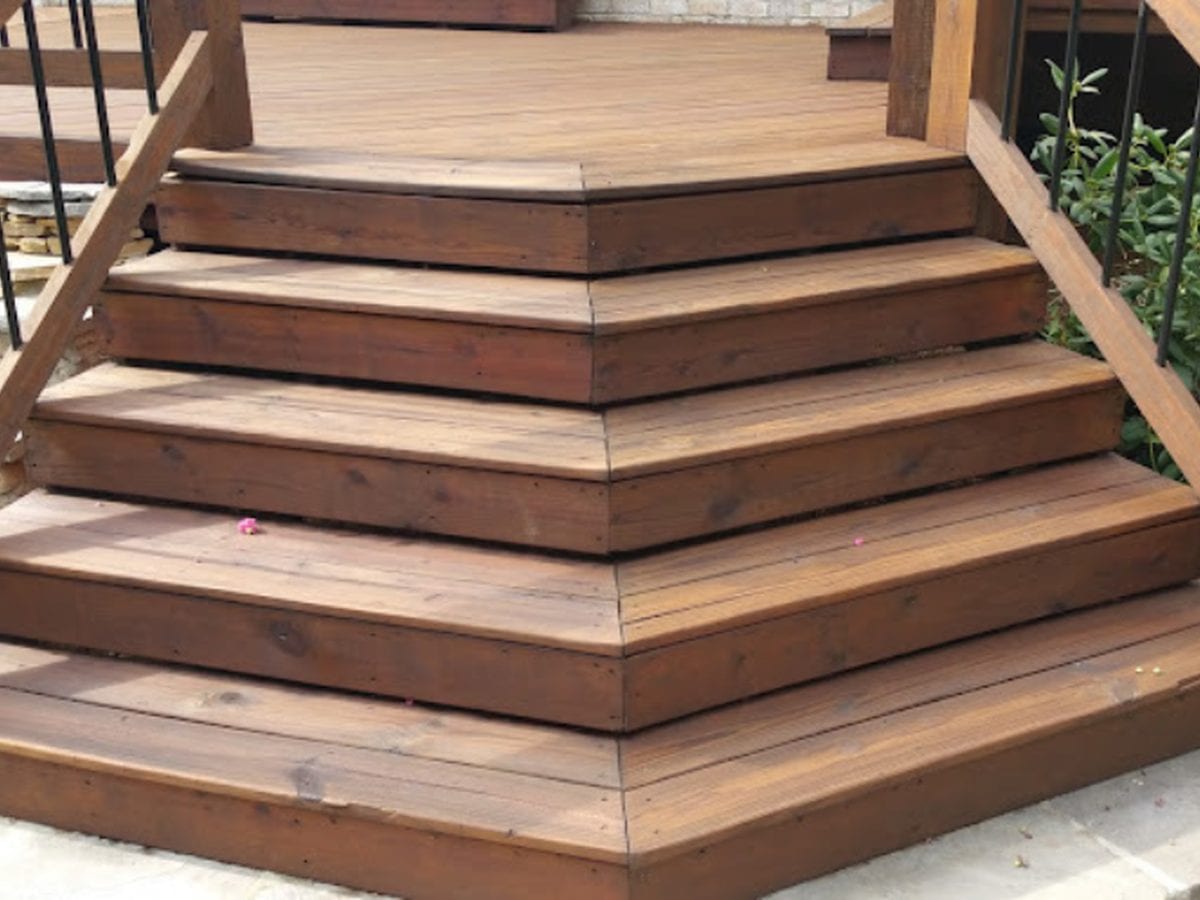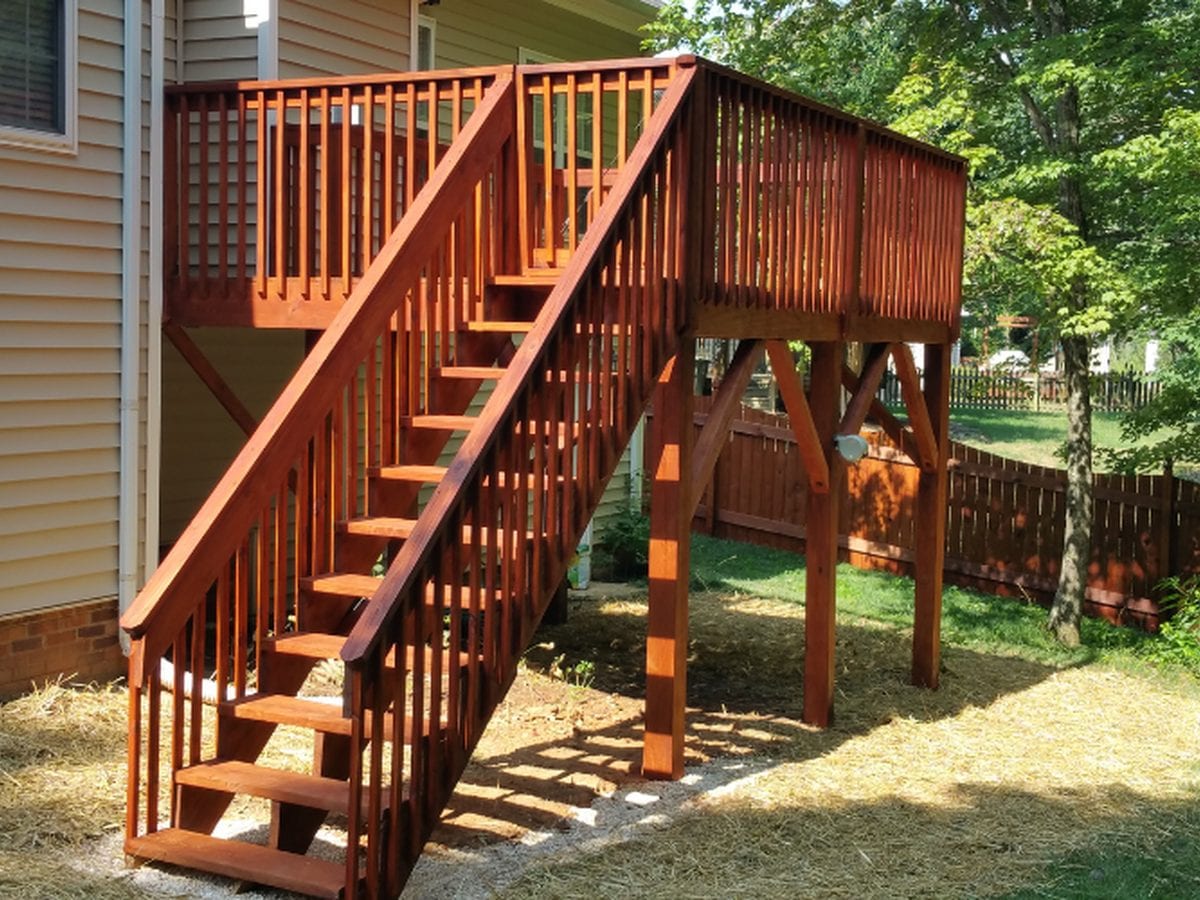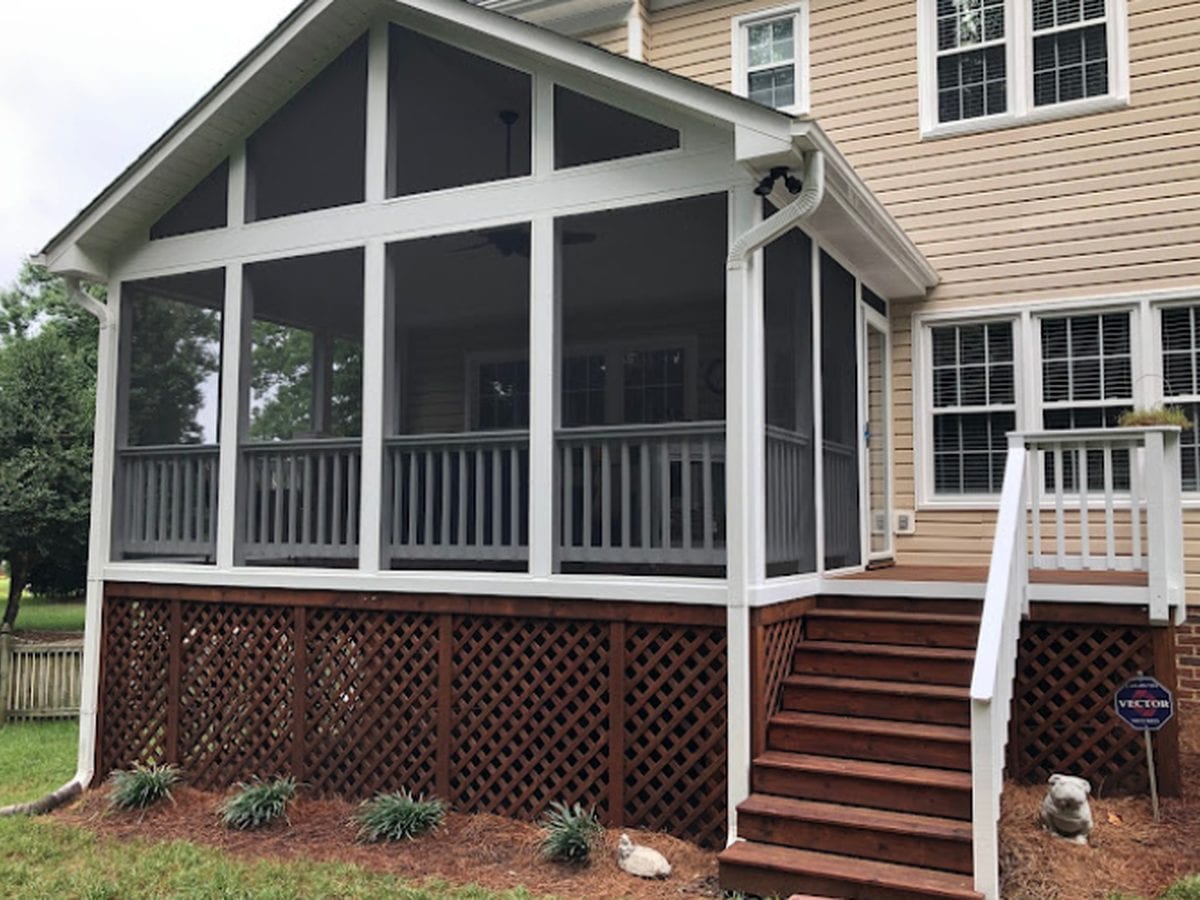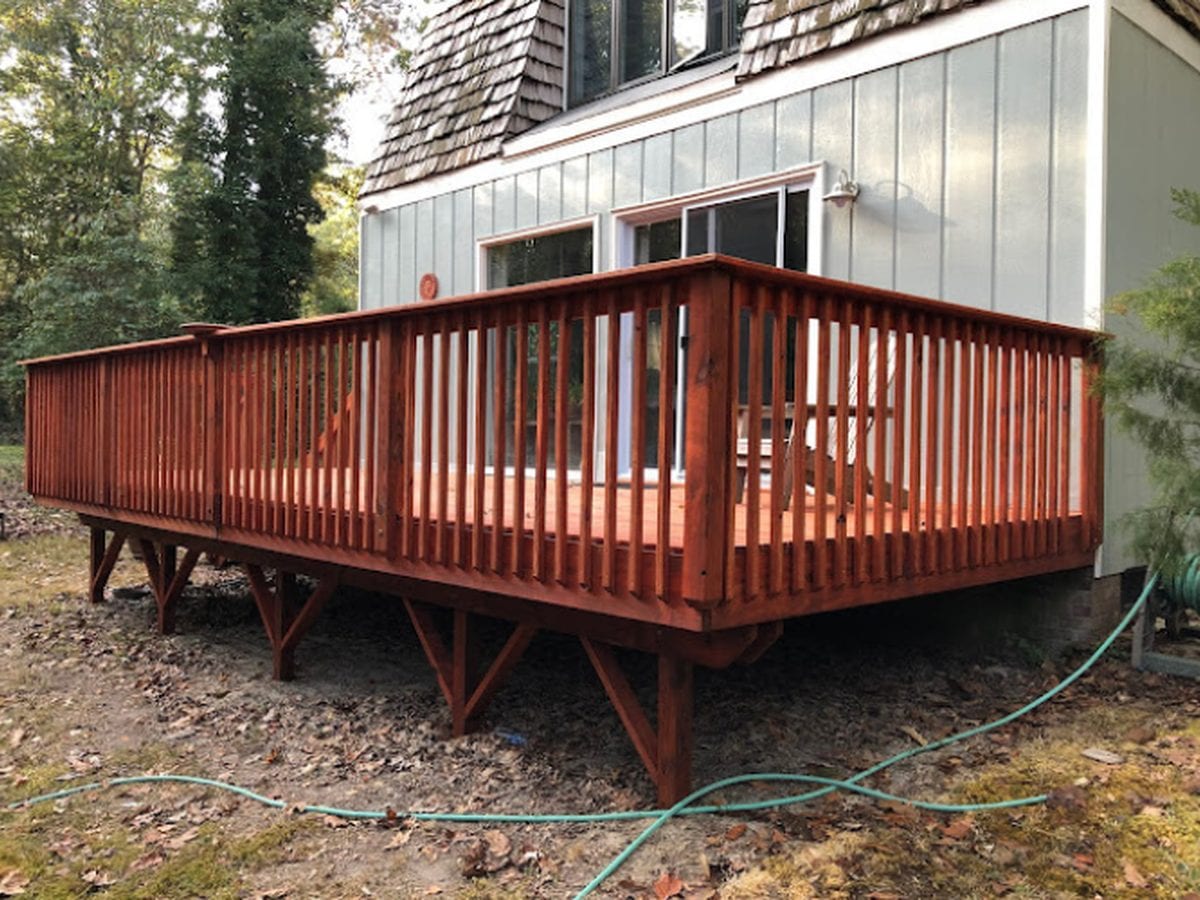
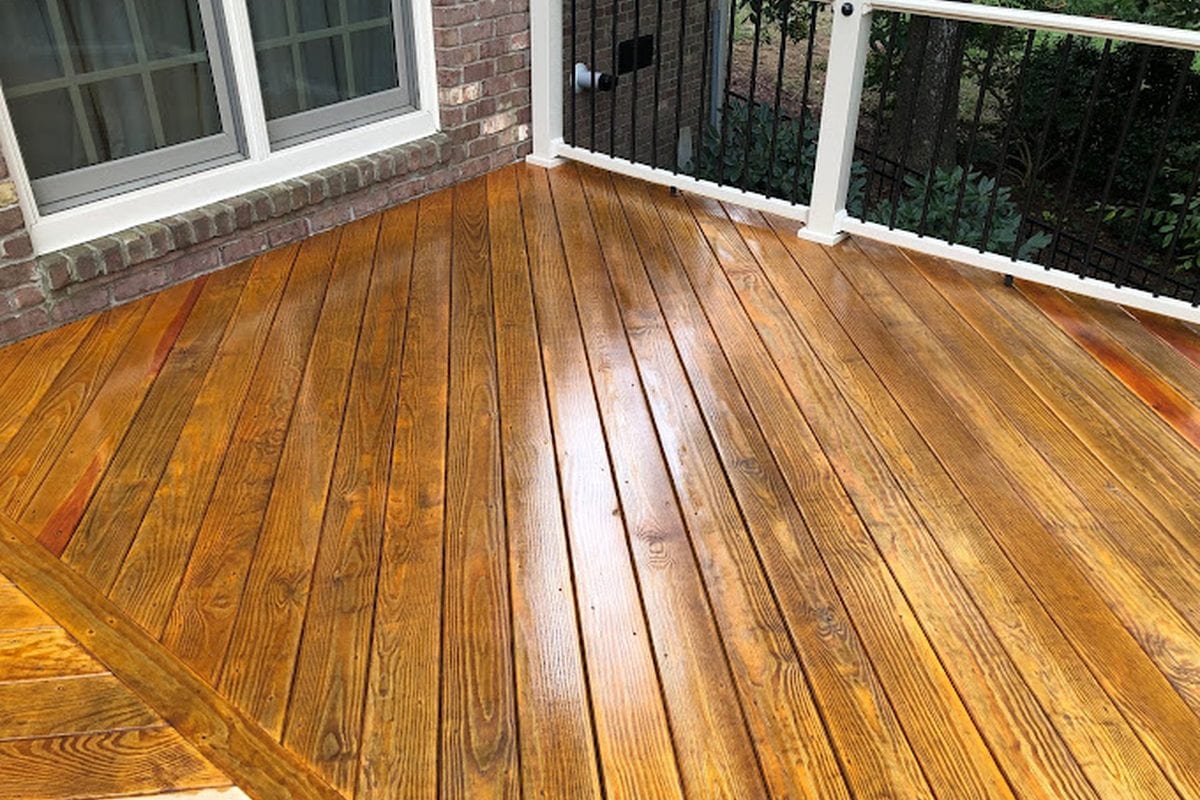
Deck restoration is the part of this business we are known for. Larry is certified in wood restoration through Deck Restoration Plus in New Jersey, and a good share of the decks we finish every year were ones the owner had been told to replace.
Stain is the last step, not the job
A deck finish fails from the surface down, and almost every premature failure traces back to what was or was not done before the stain went on.
Cleaning at a pressure the wood can survive. Decking is soft. Cleaned at the pressure you would use on a driveway, pine and cedar fuzz up, the grain tears, and the lap marks from the wand print straight through the finish. We wash with the right chemistry and the minimum pressure that does the job.
Brightening. Grey wood is UV-damaged surface fibre. A brightener restores the colour and — just as importantly — neutralises the alkaline cleaner used before it. Stain applied onto a surface that is still alkaline does not bond properly, and that alone accounts for a lot of one-season finishes.
Stripping what is already failing. A film-forming stain that is peeling has to come off. Coating over it just means the new finish leaves with the old one.
Repairs. Popped and proud fasteners, split or cupped boards, soft framing, loose rail posts. We deal with these before finishing, because a board replaced after staining never quite matches.
Then the stain
Back-brushed rather than simply sprayed, so it is worked into the wood instead of sitting on it. Colour chosen from a proper range so you are matching your house rather than taking what was in the truck.
The product depends on the deck. Penetrating oils weather by fading and are straightforward to maintain. Film-forming solid stains give more colour and more UV protection, and when they eventually fail they peel and have to be stripped. Which is right depends on the wood, its condition, how much sun it takes and how much maintenance you are prepared to do. We will talk through the trade-off instead of defaulting to one.
What our climate does to decks
Horizontal surfaces take nearly all the damage: field boards, stair treads, the top of the rail. A deck can be perfectly sound underneath and grey and furred on top, which is why the whole thing rarely needs replacing.
Shaded decks under Triad hardwoods never dry out properly between rains and grow mildew rather than fading. Open and water-side decks — around Belews Lake, the Yadkin, or simply a south-facing yard with no cover — burn through a finish considerably faster. The same product does not suit both.
Afterwards
We contact deck customers each year to check how the finish is holding. Jane C. mentioned it in her review, and it is not a sales call: wood moves, and a deck that gets looked at annually stays a maintenance job rather than becoming a restoration.