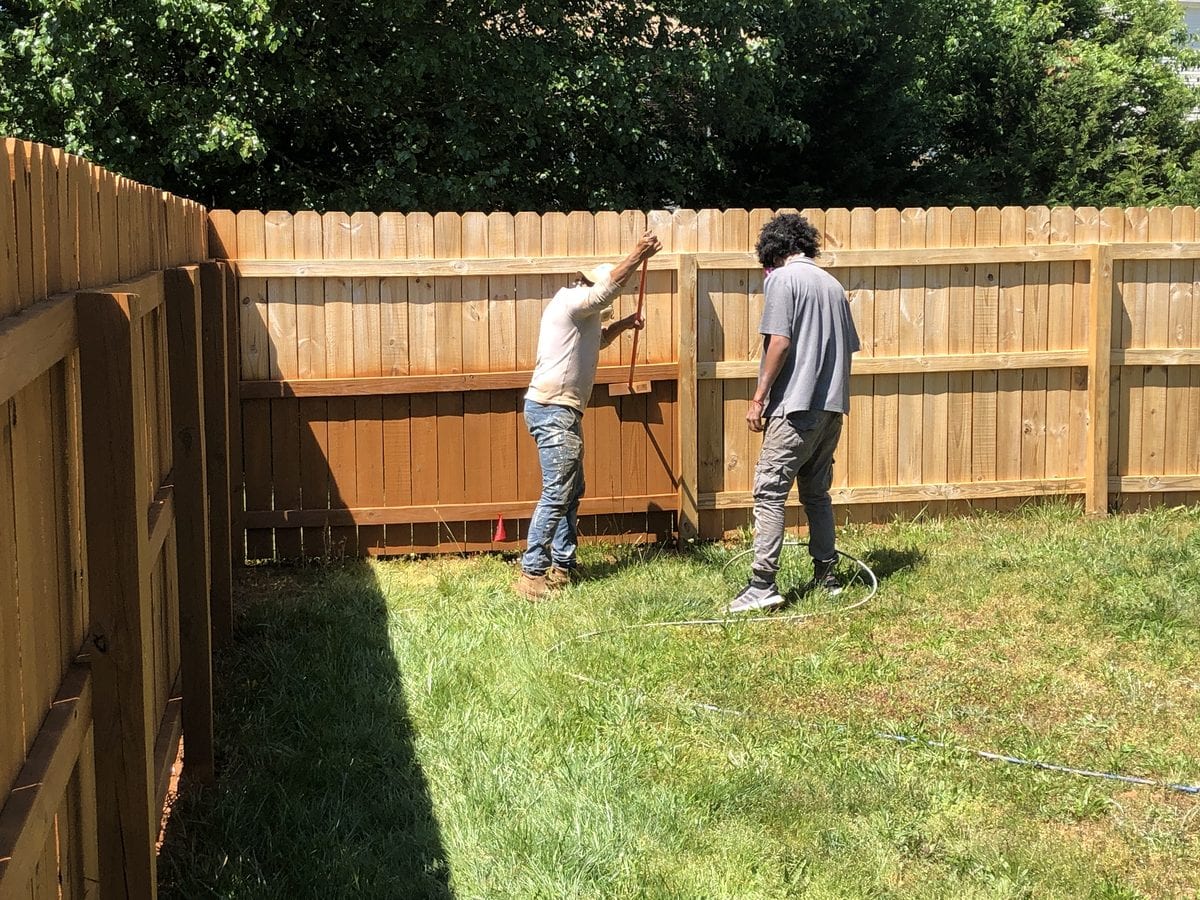
Board, picket, privacy and split-rail fencing, plus the sheds, pergolas, arbours and outbuildings that usually come with it. A stained fence lasts materially longer than a bare one, and the difference in appearance from the street is larger than most people expect.
Do the whole run at once
This is the single most important thing about fence work. A fence stained in two sessions a year apart reads as two fences from then on, because the untreated section weathers in the meantime and never quite catches up. If budget means phasing it, we would rather phase by complete elevation — the whole street-facing run this year, the sides next — than stop halfway along a line of boards.
Preparation
Fences collect more than people think: dirt splash from the ground, green algae on the shaded face, mildew where a hedge or shrub sits against it, and in our region a heavy coat of pine pollen every spring. None of that is a surface a stain will bond to.
So the fence is washed at a pressure the wood can take, treated for mildew where it has taken hold, and given time to dry properly before anything is applied. Staining a fence that is still carrying moisture from washing is one of the fastest ways to a blotchy finish.
Loose and broken boards, popped nails and leaning posts get dealt with first. New pressure-treated lumber needs to weather before it will accept a penetrating stain — if a fence went up last month, we will tell you to wait rather than take your money for a finish that will not hold.
Both sides, and the neighbour question
We will stain one side or both, but it is worth knowing that a fence sealed on one side and left bare on the other dries unevenly and is more prone to cupping. Where a fence is shared, that is a conversation worth having with the neighbour before the work is scheduled rather than after.
Application
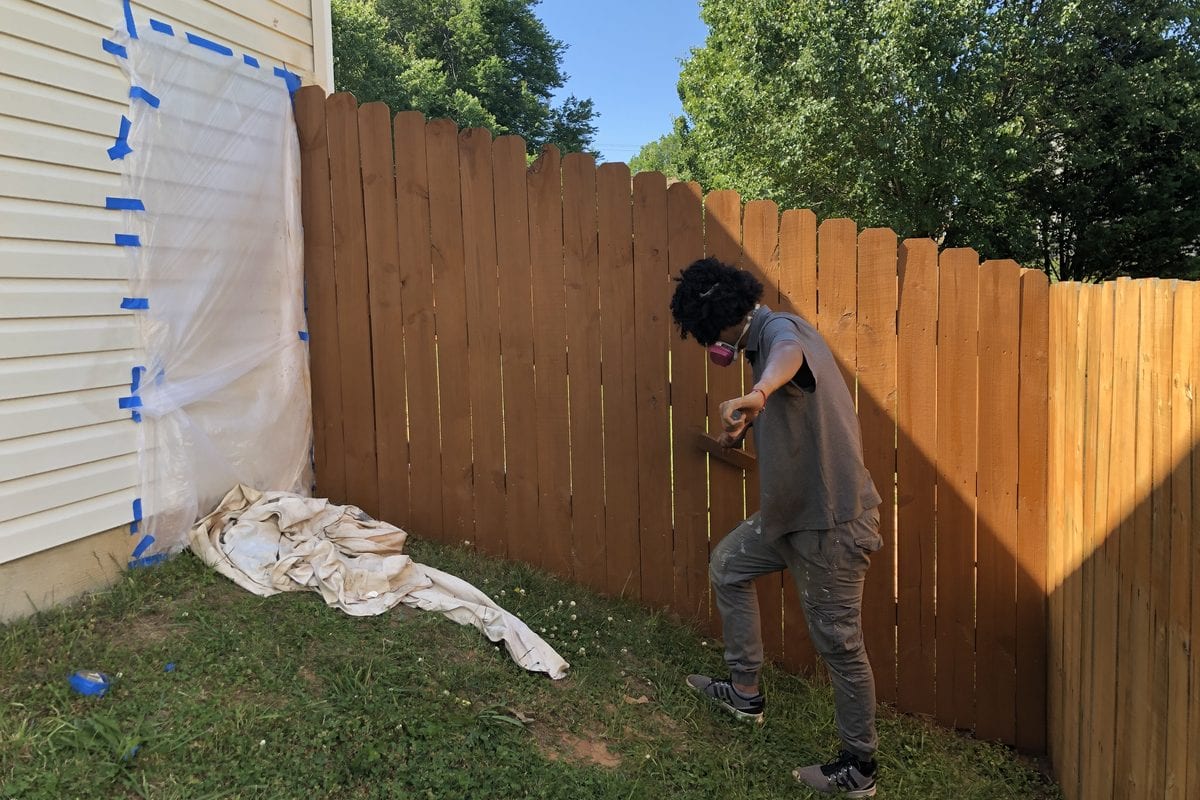
Sprayed for speed and coverage, then back-brushed to work the stain into the grain and around the fastener heads, which are exactly where water gets in. Adjacent surfaces, plantings and hardscape get masked and protected — overspray onto a neighbour's patio is a far more expensive mistake than the time it takes to prevent it.
Colour and product
A penetrating semi-transparent stain keeps the grain visible and fades gracefully, which suits most Triad fences. A solid stain gives more colour and more UV protection at the cost of eventually peeling rather than fading. Both are available in a full colour range so the fence can be tied to the house rather than left as a default brown.
Eric Snavely came to us after deciding his fence was more than he wanted to take on himself, which is how most of these jobs start.